Insights & Blog

Sharing insights, ideas, and digital trends that inspire brands to grow, innovate, and lead in the modern world.

Influencer Disclosure Crackdowns: New State Laws and What Brands Need to Get Compliant Now — Concoct blog article

2026-08-26

Influencer Disclosure Crackdowns: New State Laws and What Brands Need to Get Compliant Now

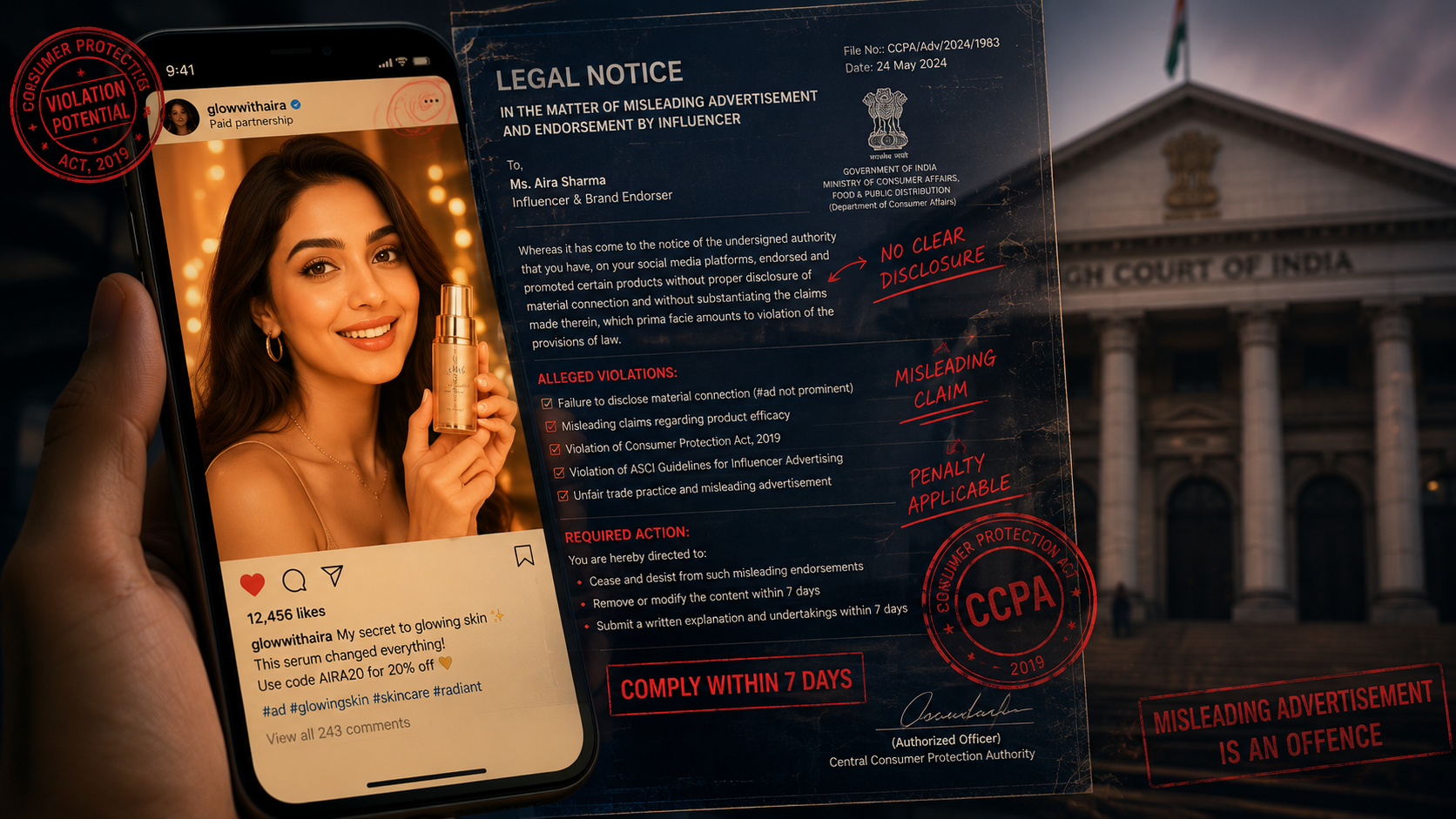
For years, influencer disclosure compliance was treated as a minor housekeeping issue — a hashtag here, a vague disclaimer there, mostly ignored by enforcement and rarely tested in court. That era is over. In the first half of 2025 alone, five class action lawsuits were filed against major brands including Shein, Revolve, Celsius, and Alo Yoga collectively seeking over $1.1 billion in damages for undisclosed influencer partnerships. The FTC current civil penalty stands at $53,088 per violation. New York and California have both passed state-level laws that go beyond federal requirements and impose their own liability frameworks. What was once a compliance checkbox is now a genuine legal and financial risk — and most brands' current practices aren't remotely adequate.
Agentic Google Ads: What Changes When AI Runs Bidding and Optimization With Less Human Input — Concoct blog article

2026-08-21

Agentic Google Ads: What Changes When AI Runs Bidding and Optimization With Less Human Input

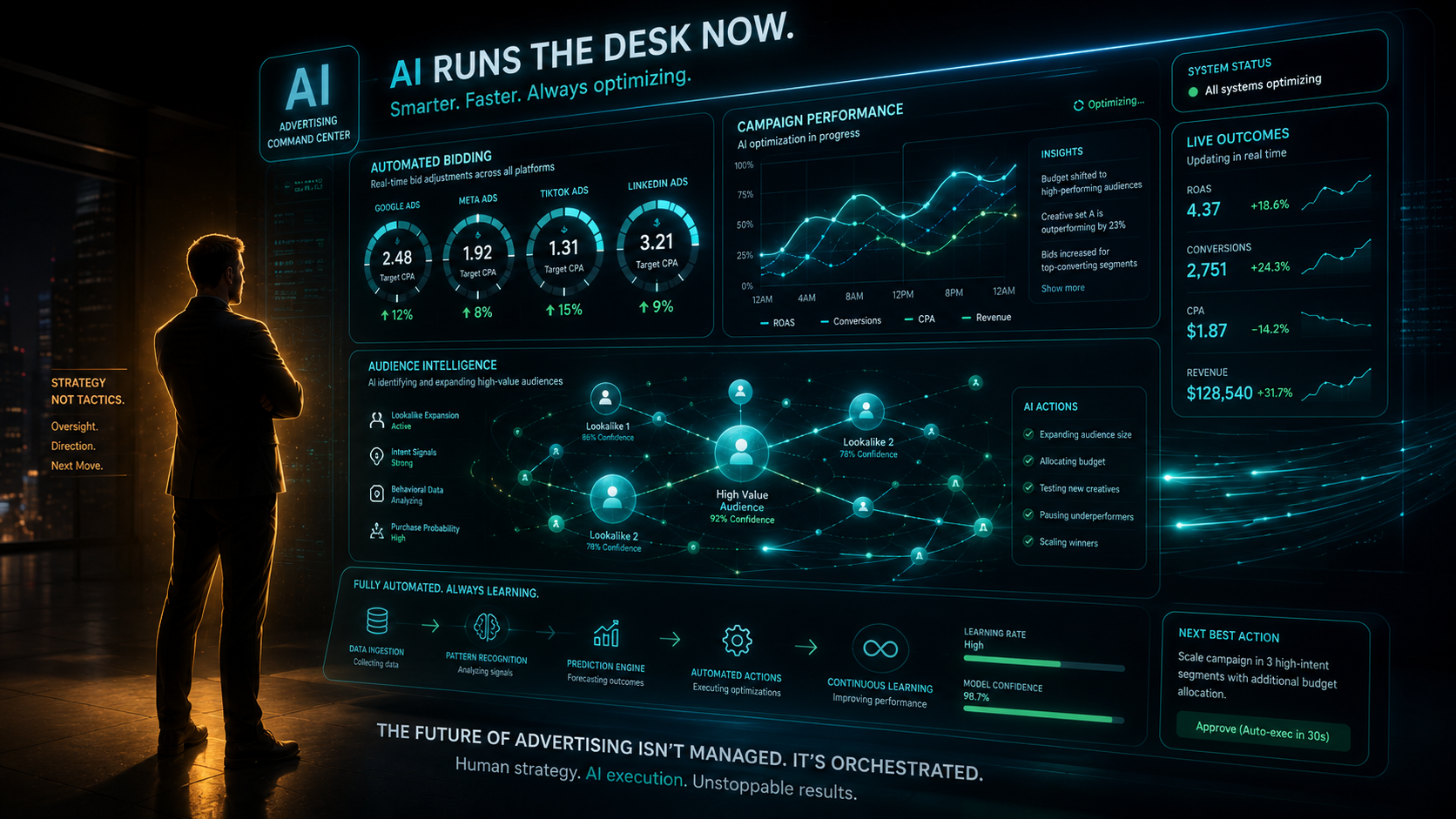
If you opened Google Ads three years ago and opened it today, the interface may look familiar, but the way campaigns work has changed completely. Behind the dashboard, Google Ads automation and AI-powered advertising now make many of the most important decisions, including which bid to place, which auction to enter, which search query to target, and which user is most likely to convert. Through tools like Smart Bidding, Performance Max, AI Max for Search campaigns, broad match keywords, and auction-time bidding, Google AI processes thousands of real-time signals and adjusts campaign optimization faster than any human advertiser can. This is not a future trend; it is the current default for paid search strategy, conversion tracking, lead generation, ROAS optimization, customer acquisition, and digital marketing performance. The businesses using Google Ads best today are not only managing keywords and bids; they are setting clear goals, feeding clean conversion data, improving landing pages, monitoring search terms, creating strong ad assets, and understanding their new role when the machine is doing most of the driving.

Nostalgia Marketing Done Right: Remixing Old Brand Assets Instead of Just Reposting Them — Concoct blog article

2026-08-19

Nostalgia Marketing Done Right: Remixing Old Brand Assets Instead of Just Reposting Them

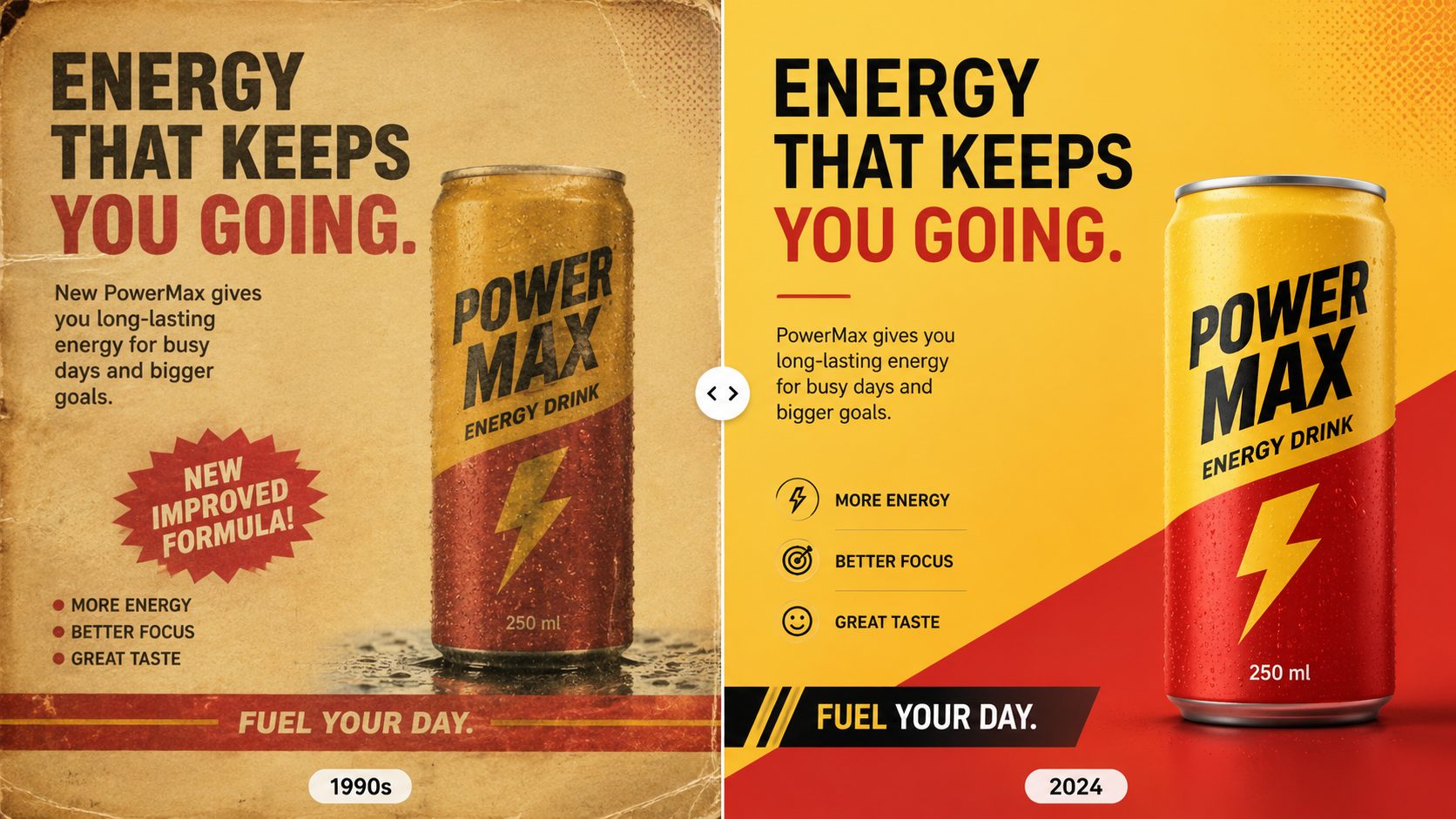
Every brand with a history longer than a decade has discovered the same temptation: dig up an old logo, post it with "Throwback Thursday" in the caption, and watch the engagement numbers climb as the comments fill with heart-eye emojis and "I remember this!" The dopamine hit is real — but it's a sugar rush, not a meal. Nostalgia is one of the most emotionally potent forces in consumer psychology, capable of building genuine warmth, collapsing price sensitivity, and creating the kind of community cohesion that modern brands struggle to manufacture from scratch. But reposting old assets is the laziest possible use of that power. The brands extracting real strategic value from their heritage aren't looking backward — they're remixing.

Machine Experience (MX) Design: Structuring Semantic Code So LLMs Can Correctly Cite Your Site — Concoct blog article

2026-08-14

Machine Experience (MX) Design: Structuring Semantic Code So LLMs Can Correctly Cite Your Site

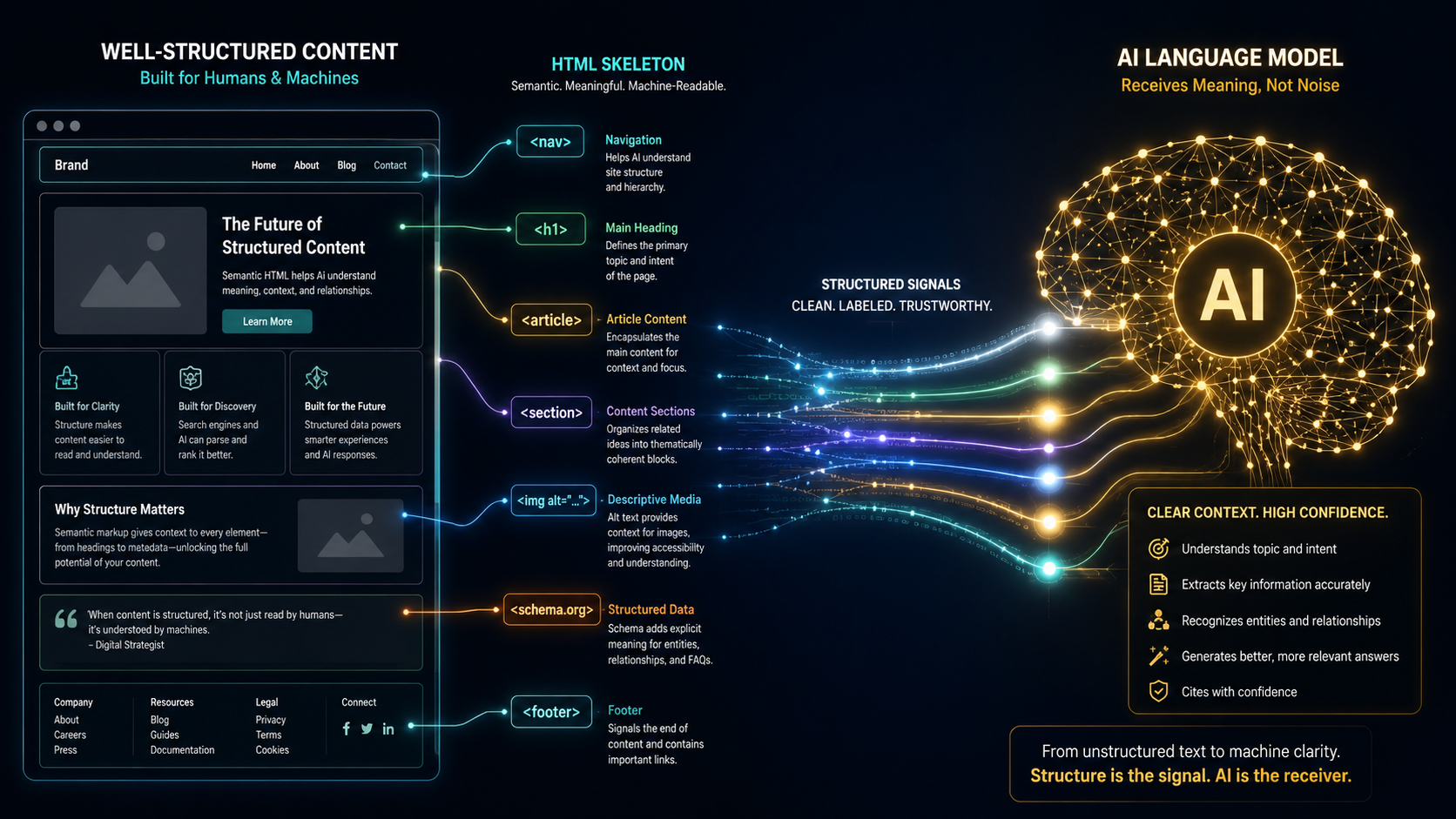
For thirty years, web design has had one primary audience: humans. Every layout decision, every navigation pattern, every color choice has been optimized for the human eye and the human brain moving through a browser. That's still important — but in 2026, your website has a second audience that visits far more frequently, reads every page almost instantly, and has enormous influence over whether your content gets surfaced to thousands of real humans: large language models. AI engines like ChatGPT, Perplexity, Claude, and Google's AI Overviews are constantly parsing the web, and how well your site is structured for machine reading directly determines whether it gets correctly understood, attributed, and cited — or silently ignored in favor of a competitor whose code is cleaner to parse.

Why YouTube Has Overtaken Reddit as a Key Signal for AI Search Authority — Concoct blog article

2026-08-12

Why YouTube Has Overtaken Reddit as a Key Signal for AI Search Authority

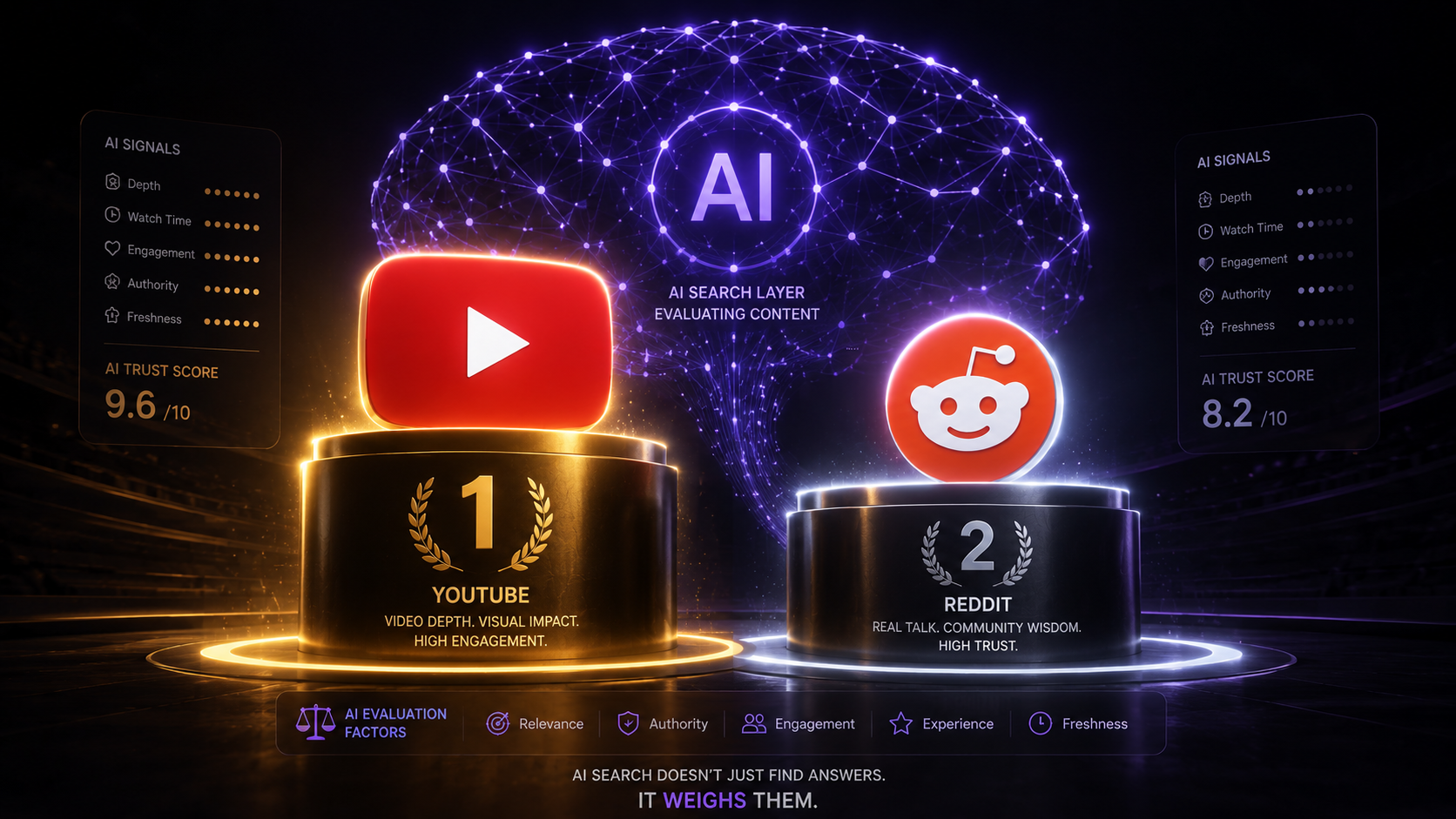
Eighteen months ago, Reddit was the darling of AI search optimization — its threads were surfacing everywhere in Google results, its authentic community voice was being cited by AI engines as proof of genuine human consensus, and "rank in Reddit" became a legitimate growth strategy for brands willing to show up as real contributors. That window hasn't closed entirely, but the landscape has shifted in a meaningful and largely undiscussed direction: YouTube has quietly become the more powerful authority signal for AI-generated answers — and the reasons why reveal something important about how AI search engines are evolving their definition of credibility in 2026.

Search Everywhere Optimization: SEO Evolving Beyond Google into TikTok, Reddit, YouTube, and AI Answers — Concoct blog article

2026-08-07

Search Everywhere Optimization: SEO Evolving Beyond Google into TikTok, Reddit, YouTube, and AI Answers

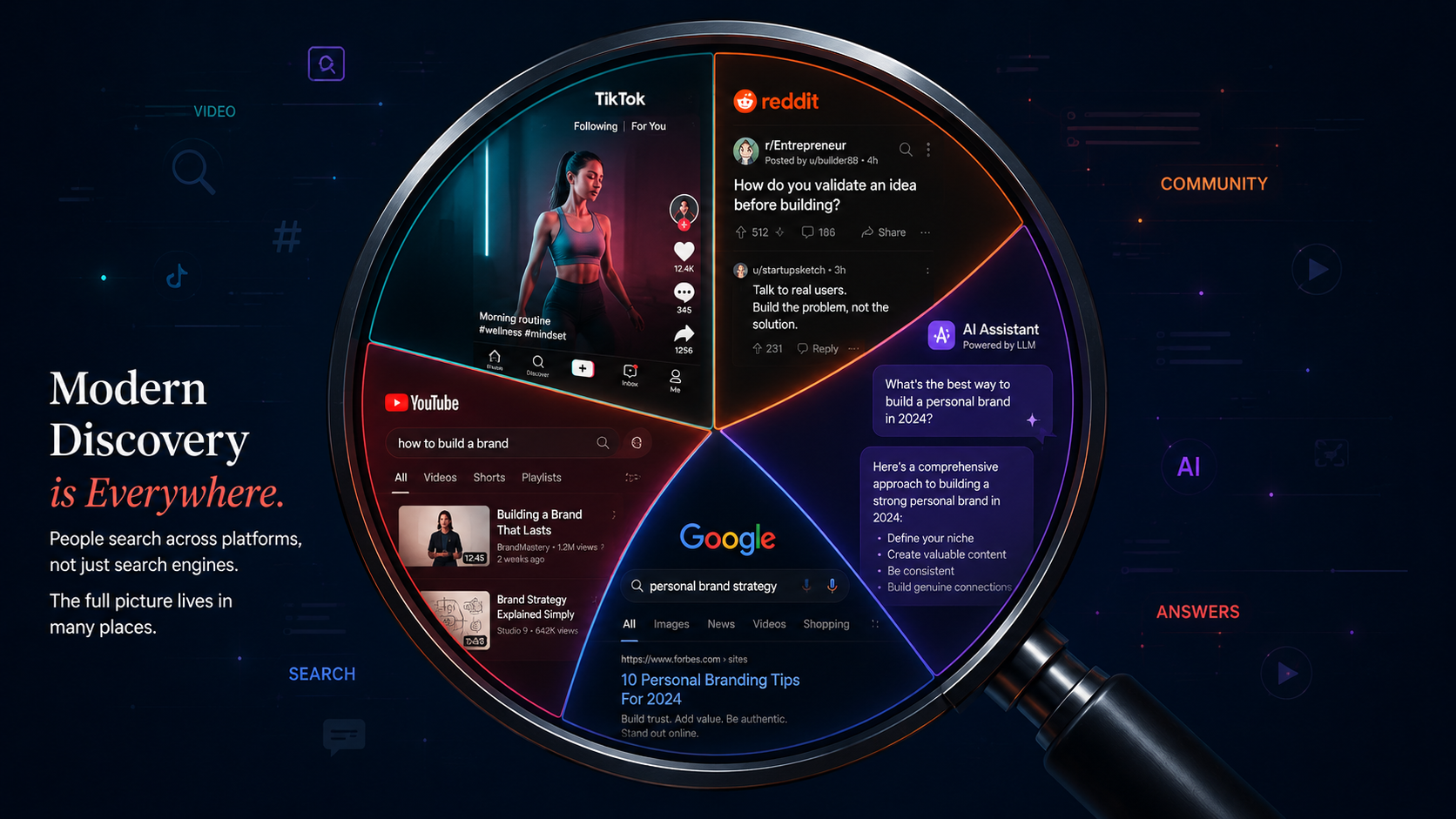
For the better part of two decades, "doing SEO" meant one thing: ranking higher on Google. Build backlinks, optimize title tags, write content around keywords — and wait for the traffic to follow. That playbook still matters, but in 2026 it's no longer sufficient on its own, because the way people search for things has fundamentally changed. A Gen Z consumer looking for the best skincare routine doesn't start with Google — they open TikTok. A developer researching whether a framework is worth learning doesn't read blog posts — they search Reddit threads. A busy professional asking a quick strategic question doesn't scroll ten blue links — they ask an AI and read the synthesized answer. Search has fragmented across a dozen surfaces, and businesses that only optimize for one of them are becoming invisible to significant portions of their audience.

Vibe Branding: Building a Recognizable Feeling Across Retail, Product, and Community — Concoct blog article

2026-07-23

Vibe Branding: Building a Recognizable Feeling Across Retail, Product, and Community

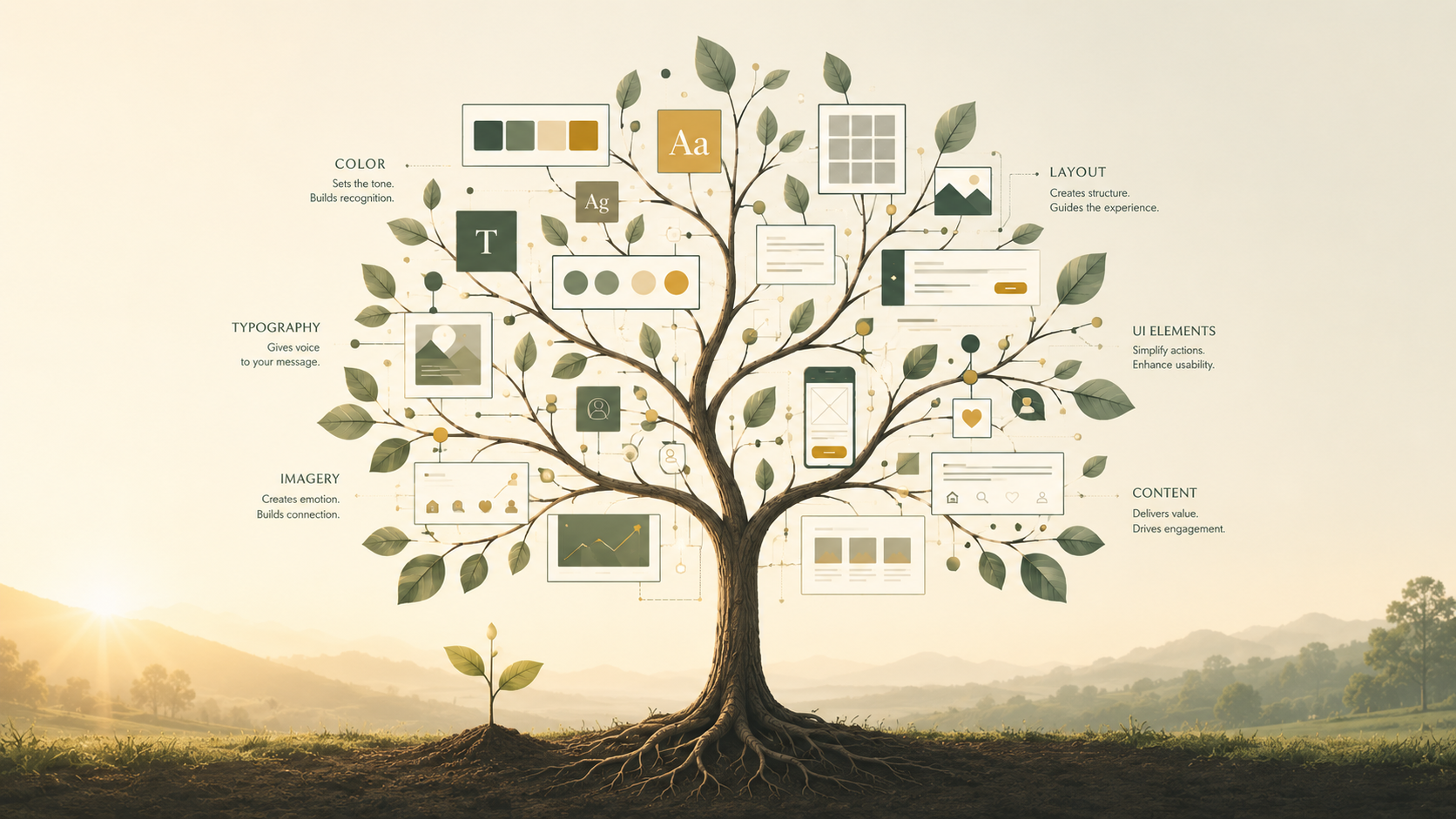
There's a category of brand you recognize before you can explain why. You walk into a store, open a package, or scroll through a community of customers — and something clicks immediately, a feeling you've associated with this brand without consciously learning it. It's not the logo that does it, or the tagline, or even the color palette alone. It's something more elusive and more powerful than any single asset: a vibe — a consistent emotional signature that shows up in how the product feels in your hand, how the retail space smells and sounds, how existing customers talk about the brand to their friends. Vibe branding isn't a trend or a buzzword. It's the recognition that in a market drowning in messaging, the most durable brands are built on feeling, not just information.

Building Brands That Scale: The Concoct Approach to Sustainable Growth — Concoct blog article

2026-07-21

Building Brands That Scale: The Concoct Approach to Sustainable Growth

Scaling a brand and scaling chaos often look identical from the outside — both involve more revenue, more visibility, and more activity. The difference only becomes visible when you look closely at whether the brand underneath all that growth still feels coherent, or whether it's quietly fragmenting under the weight of rapid expansion. Sustainable scaling isn't about growing faster; it's about growing in a way that strengthens brand identity rather than diluting it, and that requires a deliberate system rather than reactive improvisation. Creative studios like Concoct (concoct.co.in) have built their methodology specifically around this distinction — treating brand-building as connected infrastructure designed for growth, not a one-time creative project.

Why Businesses Need an Integrated Growth System Instead of Multiple Vendors — Concoct blog article

2026-07-17

Why Businesses Need an Integrated Growth System Instead of Multiple Vendors

It usually starts innocently enough: a freelancer for the logo, an agency for the website, another for paid ads, a third for social media management, and an SEO consultant brought in somewhere along the way because someone mentioned rankings were slipping. Three years later, the business is paying five different invoices, attending five different status calls, and still asking the same question — why doesn't any of this feel like it's actually working together? The multi-vendor approach feels like flexibility, but past a certain point, it quietly becomes the very thing holding growth back: fragmentation disguised as choice.

From Logo to Lead Generation: Building a Complete Brand Ecosystem — Concoct blog article

2026-07-14

From Logo to Lead Generation: Building a Complete Brand Ecosystem

Most businesses start their branding journey by commissioning a logo — and then stop there, treating it as the finish line rather than the first piece of something much larger. A logo is important, but on its own, it generates exactly zero revenue. The businesses that actually grow understand branding differently: not as a single deliverable, but as a connected ecosystem where visual identity, messaging, digital presence, and lead generation systems all work together as one coherent machine. Build the pieces in isolation, and you end up with a beautiful logo sitting on a website that converts nobody. Build them as an ecosystem, and every piece reinforces the others.

Transforming Businesses Through Creative Intelligence — Concoct blog article

2026-07-10

Transforming Businesses Through Creative Intelligence

For decades, creativity was treated as a department — something that lived in the design team, the marketing studio, or the ad agency, separate from the "serious" business of strategy and operations. That era is over. The businesses pulling ahead in 2026 understand that creative intelligence — the ability to generate original ideas, reframe problems, and connect unrelated concepts into novel solutions — isn't a nice-to-have soft skill. It's a core business capability, as essential to long-term growth as financial literacy or operational efficiency, and the organizations that cultivate it consistently out-innovate, out-differentiate, and outlast those that don't.

The Psychology of Color in Branding and Packaging Design — Concoct blog article

2026-07-07

The Psychology of Color in Branding and Packaging Design

Before a customer reads your tagline, scans your ingredient list, or compares your price to a competitor, their brain has already made a snap emotional judgment based on a single, almost invisible factor: color. Color isn't a finishing touch applied at the end of a design process — it's one of the very first and most powerful signals a brand sends, capable of communicating luxury, trust, energy, or calm before a single word is read. Understanding the psychology behind color isn't a creative nicety; it's a strategic lever that directly shapes how customers feel about a product and, ultimately, whether they buy it.

SEO vs Social Media Marketing: Where Should Businesses Invest First? — Concoct blog article

2026-07-03

SEO vs Social Media Marketing: Where Should Businesses Invest First?

Every business with a marketing budget eventually faces the same crossroads: should the next rupee go toward ranking higher on Google, or toward building a following on Instagram and LinkedIn? Both channels promise growth, both demand real investment of time and money, and both are frequently oversold by agencies eager to land a retainer. The honest answer isn't "do both equally" — it's understanding what each channel is actually built to do, how quickly it pays off, and which one matches your specific business model and stage of growth.

UI/UX Design: The Secret Behind High-Converting Websites — Concoct blog article

2026-06-30

UI/UX Design: The Secret Behind High-Converting Websites

Two websites can sell the exact same product, target the exact same audience, and spend the exact same amount on traffic — yet one converts at 1% and the other at 8%. The difference almost never comes down to the product itself. It comes down to design decisions so subtle most visitors never consciously notice them: where a button sits, how a page loads, what color draws the eye first, how much friction exists between curiosity and checkout. High-converting websites aren't lucky. They're engineered, one deliberate UI/UX decision at a time.

10 Signs Your Website Is Costing You Customers — Concoct blog article

2026-06-26

10 Signs Your Website Is Costing You Customers

Your website never tells you when it's failing. There's no error message that pops up saying "a customer just left because your page took too long to load" or "someone abandoned their cart because they couldn't find your phone number." Instead, the damage happens silently — bounce rates climb, inquiries dry up, and you're left wondering why traffic isn't converting into business. The good news is that most website-driven customer loss follows predictable, fixable patterns. Here are ten of the clearest warning signs your site might be quietly pushing customers away.

Why Flyers and Marketing Collaterals Still Matter in the Digital Age — Concoct blog article

2026-06-23

Why Flyers and Marketing Collaterals Still Matter in the Digital Age

In a world dominated by Instagram ads, email funnels, and algorithm-driven feeds, it's easy to assume print marketing has quietly died. But walk into any thriving local café, gym, salon, or community event, and you'll still find flyers on counters, brochures in waiting rooms, and posters on bulletin boards — because they work. Physical marketing collateral hasn't survived the digital age by accident; it's survived because it does something screens fundamentally can't: it occupies physical space in someone's world, demanding a kind of attention that a scrollable ad simply cannot replicate.

Catalogue Design Best Practices for Product and Service Businesses — Concoct blog article

2026-06-21

Catalogue Design Best Practices for Product and Service Businesses

A catalogue is often the closest thing a customer has to physically holding your entire business in their hands. Whether it's a printed booklet for a furniture showroom or a digital PDF for a B2B service provider, the catalogue's job is singular and demanding: help someone go from "I'm curious" to "I want this" without a salesperson standing beside them. Yet so many catalogues fail at this basic task — overcrowded pages, inconsistent formatting, and photography that does the product no justice. Done right, however, a catalogue becomes one of the most efficient, scalable sales tools a business can own.

How Professional Presentations Build Trust and Drive Business Opportunities — Concoct blog article

2026-06-19

How Professional Presentations Build Trust and Drive Business Opportunities

Every pitch meeting, investor call, and client proposal is a trust transaction happening in real time. Before a prospect agrees to work with you, invest in you, or hire you, they're unconsciously asking one question: can I rely on this person? A polished, professionally designed presentation answers that question before you've even finished your first slide. It signals competence, preparation, and respect for the audience's time — and in a world where attention is the scarcest resource, that signal is often the difference between winning the room and losing it.

Corporate Profiles That Win Clients: Essential Elements Every Business Needs — Concoct blog article

2026-06-17

Corporate Profiles That Win Clients: Essential Elements Every Business Needs

Most businesses have a corporate profile. Very few have one that actually works. A company profile is often the first document a potential client reads before deciding whether to take a meeting, respond to a proposal, or shortlist you over a competitor — and yet most profiles read like a Wikipedia entry: dry, self-congratulatory, and completely focused on the company rather than the client. The businesses that consistently win new clients understand one simple truth — a great corporate profile isn't about you. It's about making your prospect feel understood, reassured, and genuinely excited to work with you.

Why Is There Such a Large Price Difference in Website Development Services Among Agencies? — Concoct blog article

2026-06-15

Why Is There Such a Large Price Difference in Website Development Services Among Agencies?

You send out the same project brief to five different agencies and get back five wildly different quotes — one for ₹15,000, another for ₹4,00,000, and everything in between. It's confusing, frustrating, and honestly a little suspicious. Are the expensive ones just overcharging? Are the cheap ones cutting corners? The truth is more nuanced than either extreme — and understanding what's actually driving that price gap could save you from one of the most common and costly mistakes businesses make when building their online presence.

Packaging Design That Sells: How Great Packaging Influences Buying Decisions — Concoct blog article

2026-06-12

Packaging Design That Sells: How Great Packaging Influences Buying Decisions

You have less than seven seconds to make a first impression on a shelf — or a screen. Before a customer reads a single word of your copy, before they know your price, before they've ever heard of your brand, they've already formed an opinion based on one thing: your packaging. Great packaging design isn't just about looking pretty. It's a strategic business tool that communicates value, triggers emotion, and quietly does the selling before any human conversation ever begins.

Why Strong Branding Is the Foundation of Business Growth — Concoct blog article

2026-06-10

Why Strong Branding Is the Foundation of Business Growth

Most businesses spend their early energy on products, pricing, and paid ads — and completely overlook the one thing that makes all of it stick: their brand. Branding isn't just your logo or your color palette. It's the feeling people get when they encounter your business, the story they tell others about you, and the reason they come back. In a world where consumers are bombarded with thousands of messages every day, a strong brand isn't a luxury — it's survival.

How Can I Set Up My Website? Your No-Fluff Guide to Going Live in 2026 — Concoct blog article

2026-06-08

How Can I Set Up My Website? Your No-Fluff Guide to Going Live in 2026

Setting up a website can feel overwhelming — but it doesn't have to be. Whether you're a freelancer wanting a portfolio, a small business owner ready to grow online, or simply someone with an idea worth sharing, the process is far more accessible than most tutorials make it seem. This guide cuts through the noise and walks you through it, step by step, in plain language.